

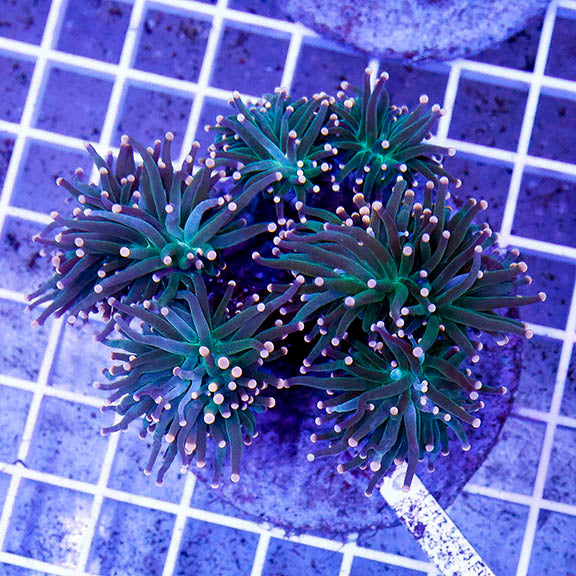
Torch Coral Indonesia 3" WYSIWYG
Torch Coral Indonesia 3" WYSIWYG
(Euphyllia glabrescens)
Couldn't load pickup availability
Care Level: Moderate
Color: Green and Purple
dKH: 8 - 12
Family: Caryophylliidae
Lighting: Moderate
pH: 8.1 - 8.4
Placement: Bottom
Reef Compatible: Yes
Specific Gravity: 1.023-1.025
Supplements: Magnesium, Trace Elements, Calcium and Strontium
Temperament: Aggressive
Temperature: 72 - 78° F
Waterflow: Medium
Share
Overview
The Euphyllia Torch Coral is a large polyp stony (LPS) coral, often referred to as Trumpet Coral or Pom-Pom Coral. It has long and flowing polyps with single rounded tips which are visible throughout the day and night, hiding its branching skeletal base most of the time. It may be brown or green with yellow on the tips of its tentacles. The yellow will sometimes appear to glow under actinic lighting.
Provide plenty of room between the Euphyllia Torch Coral and other sessile animals, since at night, its sweeper tentacles can extend up to several inches from its base and sting other coral species. It is moderately difficult to maintain, but it is a popular coral that will thrive under proper conditions and excellent water quality parameters. Ideally, it needs to have moderate lighting combined with moderate water movement within the aquarium. Its aquatic home will also require the addition of calcium, strontium, and other trace elements to the water for its continued good health. It will also benefit from additional food fed weekly in the form of micro-plankton or brine shrimp.
Diver's Den® species are what-you-see-is-what-you-get - the EXACT item you are ordering, not a representative photo. This specimen is currently available. To order, click the Add To Cart button at the top right of the page.
All Diver's Den®items must be shipped within 2 shipping days of placing your order.
Please note: if you do not complete your order by checking out, someone else may order this specimen.