

Pinnatus Batfish - EXPERT ONLY
Pinnatus Batfish - EXPERT ONLY
Couldn't load pickup availability
Care Level: Expert Only
Color: Brown, Orange and Black
Diet: Omnivore
dKH: 8 - 12
Family: Ephippididae
Maximum Size: 18"
Minimum Tank Size: 300 Gallons
pH: 8.1 - 8.4
Reef Compatible: No
Specific Gravity: 1.020-1.025
Temperament: Peaceful
Temperature: 72 - 78° F
Share
Overview
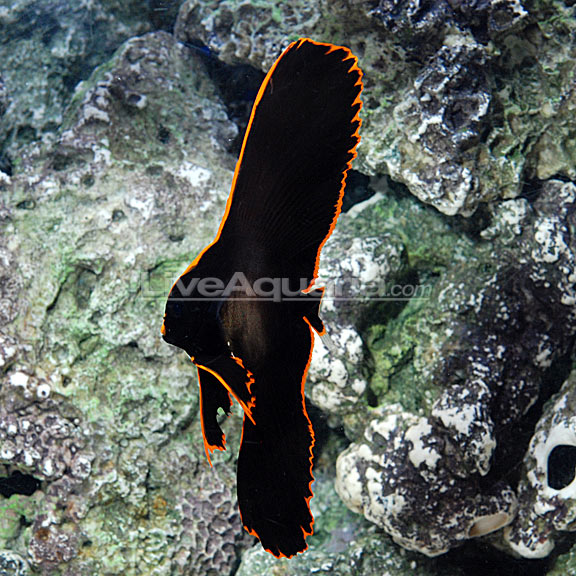
Known by several names, including Red-Stripe, Pinnate, Shaded, Dusky, Red-Faced, Long-Finned or Red-Finned Batfish, the Pinnatus can reach up to 20 inches in length. Juveniles have a striking red border on their body and fins; however, this generally fades with adulthood. The body has alternating vertical bands of brown and a silver-tan.
The Pinnatus Batfish is very difficult to maintain in an aquarium, often refusing to eat. The Pinnatus must be provided with a deep, 200 gallon tank and plenty of unobstructed room to swim. Unlike other batfish, the Pinnatus is very shy and needs numerous hiding places. Not a good reef dweller, it will eat many types of sessile invertebrates including corals and anemones. As with all Batfish, the Pinnatus is susceptible to ich.
A varied diet of meaty foods such as shrimp, scallops, vitamin-enriched brine shrimp, and frozen herbivore preparations should be provided. The Pinnatus should be fed three times a day.
Please Note: We guarantee that ALL aquatic life we offer will arrive alive and in good condition. However, because of the increased level of care required for this particular species, it has been designated as "Expert Only," (R) and we cannot guarantee it after arrival. As an Expert Only species, we recommend that only the expert marine aquarist, zoo, or research institution should purchase this species.
Approximate Purchase Size: Small: 2" to 3"; Medium: 3" to 4"; Large: 4" or larger