

Additional locales and sizes may be available!
Additional locales and sizes may be available! Email me when available

|

Quick Stats
What do these Quick Stats mean? Click here for more information
What do these Quick Stats mean? Click here for more information
Overview
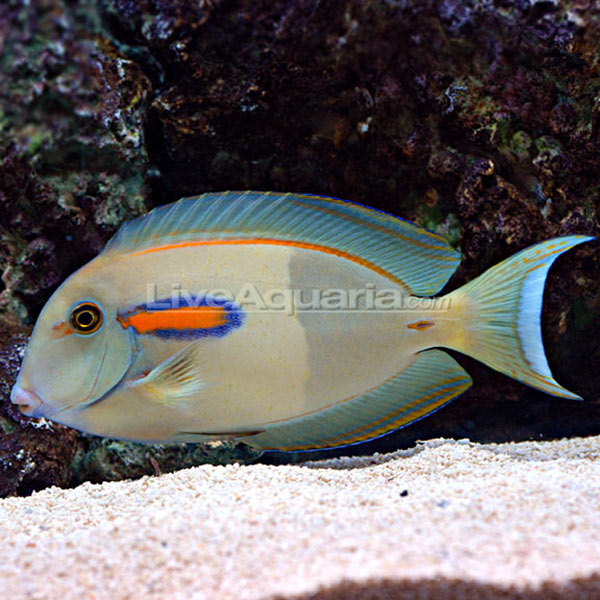
The Orangeshoulder Tang is also known as the Orange-epaulette Surgeonfish, Orangespot Surgeonfish, Orangeband Surgeonfish, and Orangeshoulder Surgeonfish. As a juvenile, it is solid yellow, with just the slightest hint of blue fringing on the anal and dorsal fins. As an adult, the front half of the body turns light gray and the back half takes on a dark gray-blue color. Above the pectoral fins is an eyecatching orange stripe that is outlined by the dark gray color. The tail takes on a lyre shape.
A 180 gallon or larger aquarium is necessary to provide plenty of swimming room. It is not aggressive towards other Tangs. If housing more than one, it is best to add a juvenile to the aquarium that contains an adult.
Although Tangs will eat meaty foods along with the other fish in the aquarium, it is important that they are offered plenty of marine based seaweed and algae. This will strengthen their immune system, reduce aggression and improve their overall health. Offer dried seaweed tied to a rock or use a veggie clip, and feed at least 3 times per week. Sea Veggies, Seaweed Salad and Ocean Nutrition are all ideal products and are very easy to use.
Approximate Purchase Size: Juvenile Small: 2" to 3"; Changing: 3" to 4"; Adult Small: 4" to 5"; Medium: 5" to 6 1/2"; Large: 6-1/2" to 8"; XLarge: 8" or Larger
Supplies You May Be Interested In
More Aquatic Life


Customer Testimonials
LiveAquaria Education Center

